Us Of Intervizion – The healthcare landscape in 2026 demands a seamless blend of in-person visits and high-quality digital consultations. Private practitioners now face the critical challenge of balancing high implementation expenses against the potential for long-term growth. Understanding The Cost of Telehealth Integration for Private Medical Practices allows you to make informed, data-driven investment decisions.
Modern patients expect instant access to their doctors through secure, high-definition video platforms and integrated mobile apps. Failing to adopt these technologies often results in a significant loss of market share to larger, tech-savvy medical groups. This guide breaks down every financial layer of virtual care to ensure your practice remains both competitive and highly profitable.

Telehealth Implementation Costs for Small Medical Offices
Small practices must account for initial setup fees that typically include platform licensing and secure network upgrades. Premium telehealth vendors often charge a one-time implementation fee ranging from $2,000 to $10,000 depending on your needs. This cost covers the basic configuration of the software and the initial migration of your existing patient records.
You must also consider the price of high-speed business internet connections to support lag-free video communication. Reliable connectivity prevents frustrating technical glitches that can damage the professional reputation of your medical staff. The Cost of Telehealth Integration for Private Medical Practices starts with a solid foundation of hardware and high-speed infrastructure.
Private Practice Digital Health Investment and Revenue Growth
Investing in digital health serves as a powerful catalyst for expanding your patient base beyond your local geographic area. Virtual visits allow doctors to see more patients in less time by reducing the administrative overhead of physical rooming. Many practices report a 20% increase in total revenue within the first year of successful telehealth adoption.
The initial investment also covers the cost of digital marketing campaigns to inform your patients about the new services. Strategic advertising ensures that your community knows you offer the convenience of remote consultations and digital prescriptions. Viewing these expenses as a growth investment rather than a burden changes the financial trajectory of your private practice.
Virtual Care ROI: Calculating Long-Term Financial Benefits
Calculating your Return on Investment (ROI) requires a deep analysis of time savings and reduced no-show rates. Telehealth platforms significantly lower the number of missed appointments by offering patients a more convenient way to visit. Every kept appointment adds direct profit to your bottom line while maximizing the efficiency of your clinical hours.
Practices also save money on physical office supplies, utilities, and front-desk staffing requirements over time. The software provides automated billing and insurance verification, which reduces the workload for your administrative team. A positive Virtual Care ROI typically manifests within 12 to 18 months of full system integration and staff training.
Medical Software Expenses and Subscription Models
Most elite telehealth providers utilize a “SaaS” (Software as a Service) model with monthly or annual subscription fees. Expect to pay between $100 and $500 per provider monthly for a platform that includes full HIPAA compliance and encryption. These fees usually include regular software updates, cloud data storage, and 24/7 technical support for your team.
Some vendors offer “pay-per-visit” models which benefit low-volume practices but can become expensive as you scale. Always negotiate your contract to include unlimited patient accounts and a robust mobile app for your clinical staff. Comparing different Medical Software Expenses ensures you choose a platform that aligns with your specific budget and goals.
Healthcare Technology Investment: Hardware and Security Needs
Your practice may need to upgrade its computer hardware to support high-resolution cameras and dual-monitor setups. Investing in professional-grade microphones and noise-canceling headsets ensures clear communication during sensitive medical discussions. High-quality equipment projects a professional image that builds immediate trust and rapport with your virtual patients.
Cybersecurity remains a top priority, requiring additional investments in firewalls and advanced malware protection systems. Protecting patient data from hackers prevents devastating legal fines and keeps your medical license in good standing. A comprehensive Healthcare Technology Investment includes both the visible tools and the invisible security layers.
Staff Training and Workflow Optimization Costs
The transition to virtual care requires extensive training for your nurses, assistants, and administrative personnel. You must allocate funds for specialized workshops that teach your team how to troubleshoot common technical issues. Efficient workflows ensure that the “digital waiting room” functions just as smoothly as your physical office space.
Training expenses also include the time spent developing new clinical protocols for remote patient examinations. Your staff must learn how to guide patients through self-measurements like blood pressure or temperature over video. Investing in your human capital ensures that the technology actually improves the patient experience rather than hindering it.
HIPAA Compliance and Legal Insurance Adjustments
Maintaining strict HIPAA compliance requires specific software features such as audit logs and encrypted data transmission. Some malpractice insurance providers may adjust your premiums based on the percentage of virtual care you provide. You must consult with a legal expert to ensure your telehealth consent forms meet all state and federal regulations.
Legal fees for document review and compliance audits represent a necessary part of the integration budget. Failure to comply with privacy laws can result in millions of dollars in fines and the permanent closure of your practice. Security and legality form the backbone of a sustainable and trustworthy virtual medical environment.
Patient Onboarding and Digital Literacy Support
Helping elderly or tech-averse patients navigate your new telehealth platform requires time and patience from your staff. Creating simple “How-To” guides or short instructional videos can significantly reduce the number of support calls you receive. A smooth onboarding process increases patient satisfaction and encourages them to use the service repeatedly.
Some practices hire a dedicated “Digital Navigator” to assist patients with their initial login and setup. This role ensures that the doctor’s time remains focused purely on clinical diagnosis rather than technical support. Successful patient adoption is the key to achieving the high volume of visits needed for a strong ROI.
Integration with Electronic Health Records (EHR) Systems
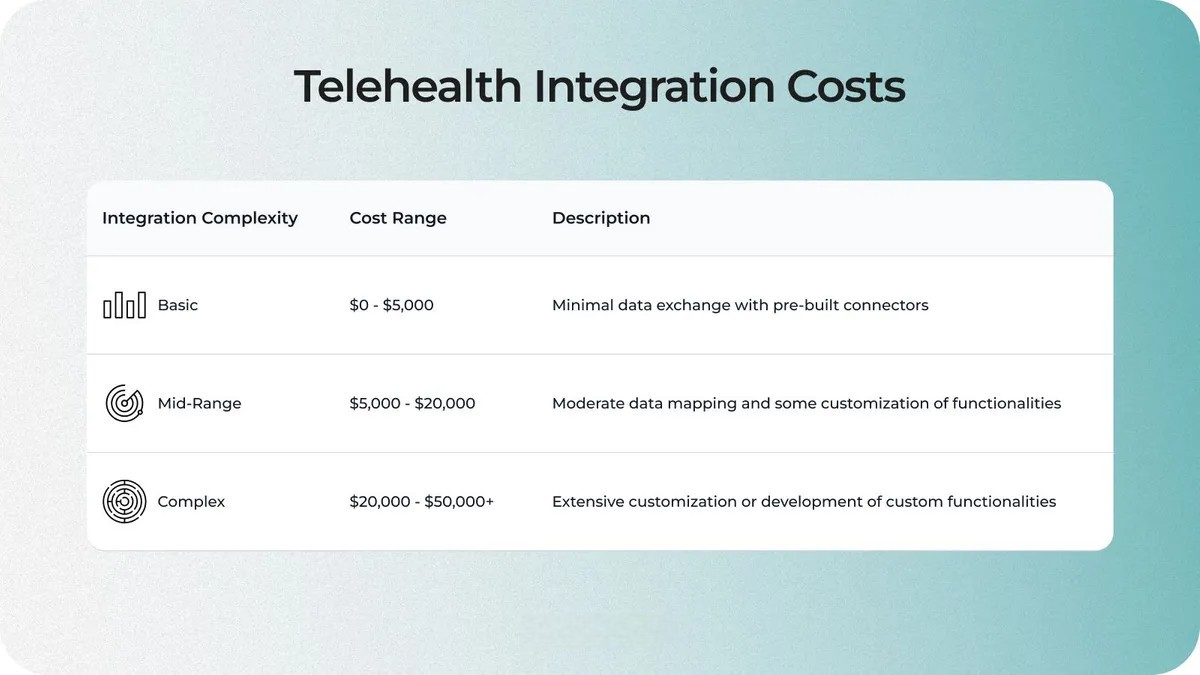
Seamless integration between your telehealth platform and your existing EHR system is non-negotiable for efficiency. Manual data entry between two separate systems increases the risk of medical errors and staff burnout. Most top-tier vendors charge an additional fee to build a “Bridge” or API connection between the two platforms.
An integrated system allows you to view patient history and take clinical notes simultaneously during the video call. This synchronization saves hours of administrative work at the end of each day for your busy medical providers. High-level integration represents a significant portion of The Cost of Telehealth Integration for Private Medical Practices.
The Future of Remote Patient Monitoring (RPM) Fees
Remote Patient Monitoring (RPM) allows you to track chronic conditions using smart devices like wearable heart monitors. Integrating RPM into your telehealth ecosystem involves additional hardware costs and specialized data analysis software. However, many insurance providers now offer specific reimbursement codes for time spent reviewing RPM data.
This technology provides a new stream of recurring revenue while improving patient outcomes through continuous monitoring. Investing in RPM capabilities positions your practice as a leader in proactive, preventative healthcare. The future of private medicine involves a data-driven approach that extends far beyond the four walls of your clinic.
Understanding The Cost of Telehealth Integration for Private Medical Practices is the first step toward a more efficient future. By carefully budgeting for software, security, and training, you create a platform that delivers an exceptional Virtual Care ROI. Secure your practice’s legacy today by investing in the digital tools that define modern, compassionate, and profitable healthcare.